
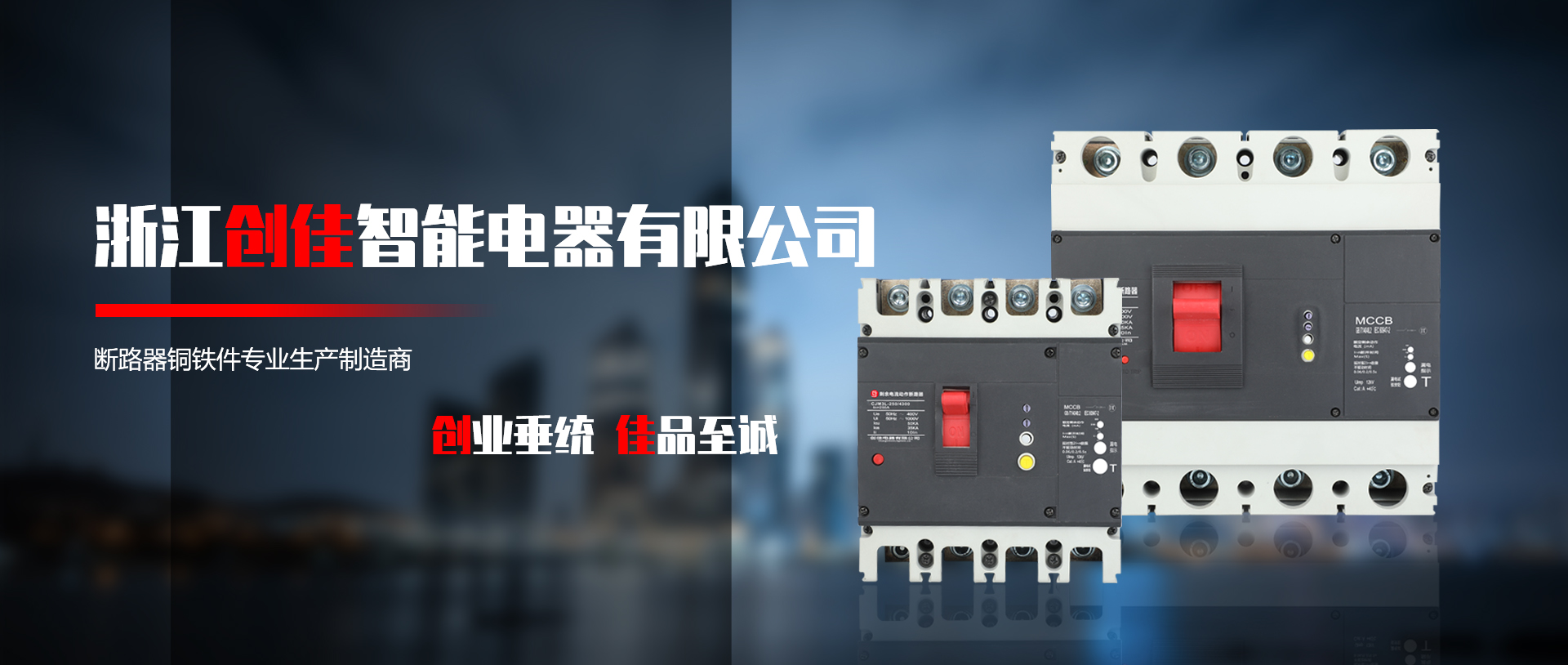
How to Choose the Right MCCB Moulded Case Components
Date:2025-10-09
Views:7
Choosing the right MCCB moulded case components requires a comprehensive evaluation. Here are some practical suggestions:
1. Clarify Your Requirements and Application
Circuit parameters - rated current: measure or estimate the normal working current of the circuit; the component's rated current should be equal to or greater than it. For a 200A circuit, choose components rated 200A or above. Too small a rating causes frequent tripping or damage from overload; too large a rating may fail to protect the circuit effectively.
Short-circuit current: know the possible short-circuit current and ensure the component's short-circuit breaking capacity is sufficient - usually expressed as ultimate breaking capacity (Icu) and service breaking capacity (Ics). If the short-circuit current exceeds the breaking capacity, the breaker may fail to clear the fault safely.
Working environment: for high or low temperatures, choose materials and designs rated for that range (standard operating range is typically -5°C to +40°C, with special products available for wider ranges). In humid or condensing environments, choose moisture-proof components or products with high protection ratings. At high altitudes, lower air pressure affects arc extinction, so choose products specially designed and tested for high-altitude use. In dusty or corrosive environments, choose components with adequate protection ratings.
2. Understand Breaker Models and Specifications
Number of poles: MCCBs come in 1P, 2P, 3P and 4P versions. Match the components to the breaker's pole number - 3P or 4P for three-phase circuits, 1P or 2P for single-phase.
Frame current: the current the breaker frame can handle varies by model. Ensure component compatibility with the frame current, otherwise installation or normal operation may be impossible.
3. Check Quality and Reliability
Brand and manufacturer: choose reputable manufacturers with good track records - check product reviews, consult professionals or refer to industry standards.
Certification and standards: ensure components comply with relevant national standards and certifications such as CCC. Certified products offer assured quality and performance.
Materials and workmanship: inspect contact materials and arc-chute structure. Quality materials and precise manufacturing extend service life and performance stability - silver-alloy contacts, for instance, outperform ordinary copper contacts in demanding circuits.
4. Consider Functions and Features
Trip unit type: thermomagnetic trip units are simple, low-cost and reliable for general protection; electronic trip units offer higher accuracy, richer protection functions and communication capability for demanding applications. Choose according to actual needs.
Accessories: select auxiliary contacts (status indication), alarm contacts (fault signaling) and shunt releases (remote tripping) as required.
5. Cost and Budget
Price: choose reasonably priced components that meet your requirements - neither chasing the lowest price at the expense of quality, nor blindly buying the most expensive.
Maintenance cost: consider spare-part prices and ease of maintenance. Components that are easy to service reduce lifetime cost.
Latest News