
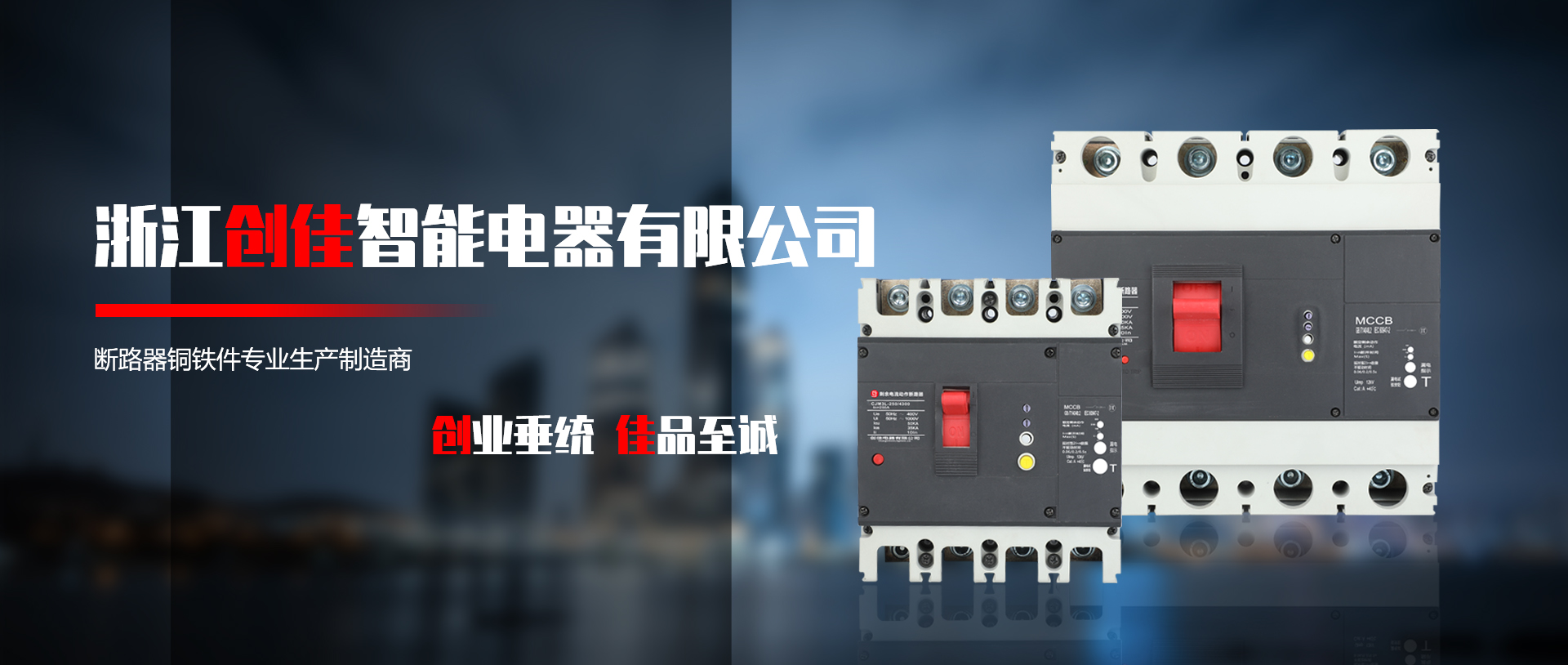
An Overview of Thermomagnetic Moulded Case Components
Date:2025-10-09
Views:5
Thermomagnetic moulded case components mainly include the following categories:
1. Trip Units
Thermomagnetic trip unit: one of the core accessories of a thermomagnetic moulded case circuit breaker. The thermal element monitors overload current: when the current exceeds the set threshold for a long period, the bimetallic strip bends due to heating and triggers the trip action, providing overload protection. The magnetic element detects short-circuit currents rapidly: once a short circuit occurs, the strong current generates a magnetic field that attracts the armature and trips the breaker instantly. In industrial power systems, thermomagnetic trip units effectively protect electrical equipment from overload and short-circuit damage.
Instantaneous trip unit: used to interrupt short-circuit currents extremely quickly. It triggers at the very moment a short circuit happens, protecting circuits and equipment. Similar to the magnetic element of a thermomagnetic trip unit, but with faster response and higher sensitivity to short-circuit currents.
2. Contact System
Movable contact: the key part that opens and closes the circuit together with the fixed contact. When the breaker is closed, the movable contact presses tightly against the fixed contact to carry the current; when the breaker opens, the operating mechanism separates them and cuts the current. It is made of highly conductive metal with good wear and arc resistance to ensure stable operation under frequent switching.
Fixed contact: mounted on the breaker base opposite the movable contact. Its surface must stay flat and clean to ensure good contact, lower contact resistance and reduce heating. In high-performance breakers, special materials or surface treatments improve resistance to arc erosion and oxidation.
3. Operating Mechanism
Handle: the manual operating part. Moving the handle switches the breaker on or off. The handle should be ergonomic, easy and effortless to operate, and reliable in different working environments.
Linkage mechanism: transmits the handle motion to the contact system so that the movable contact follows the intended path and engages or separates from the fixed contact accurately and reliably.
4. Casing
Plastic casing: the outer protective structure, usually made of high-strength plastic. It provides excellent insulation, preventing contact with internal circuits and avoiding electric shock. It also offers heat, cold and corrosion resistance for various working environments.
Casing accessories: such as terminal blocks and mounting rails. Terminals connect external wires with good conductivity and clamping force; mounting rails fix the breaker onto distribution boxes or switchgear for easy installation and maintenance.
5. Auxiliary Accessories
Auxiliary contact: indicates the breaker status (on/off). It connects to the control circuit and sends status signals to the control system for monitoring and automation.
Alarm contact: activates when the breaker faults or behaves abnormally, issuing an alarm signal - for example triggering an audible/visual alarm on overload or short circuit.
Undervoltage release: trips the breaker when the supply voltage falls below the set threshold, protecting equipment from low-voltage damage. It is connected in parallel with the breaker coil: closed under normal voltage, it opens when the voltage drops below the set value and trips the breaker.
Shunt release: trips the breaker on an external control signal, enabling remote opening for easier control and management of the circuit.
Previous
NoneLatest News